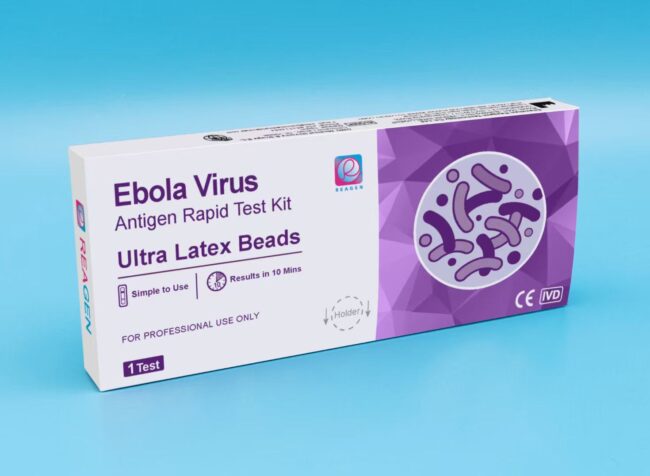
【INTENDED USE】
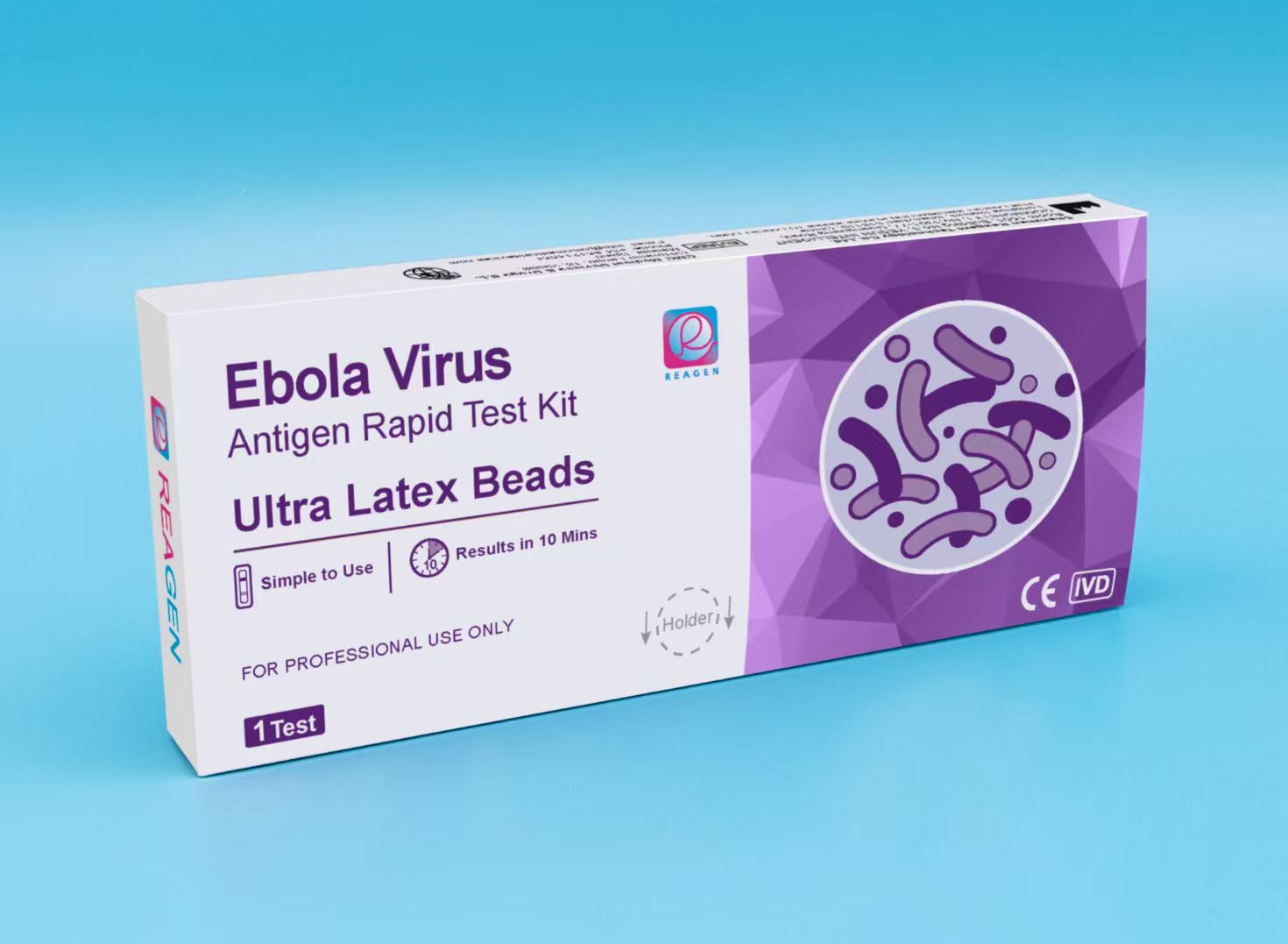
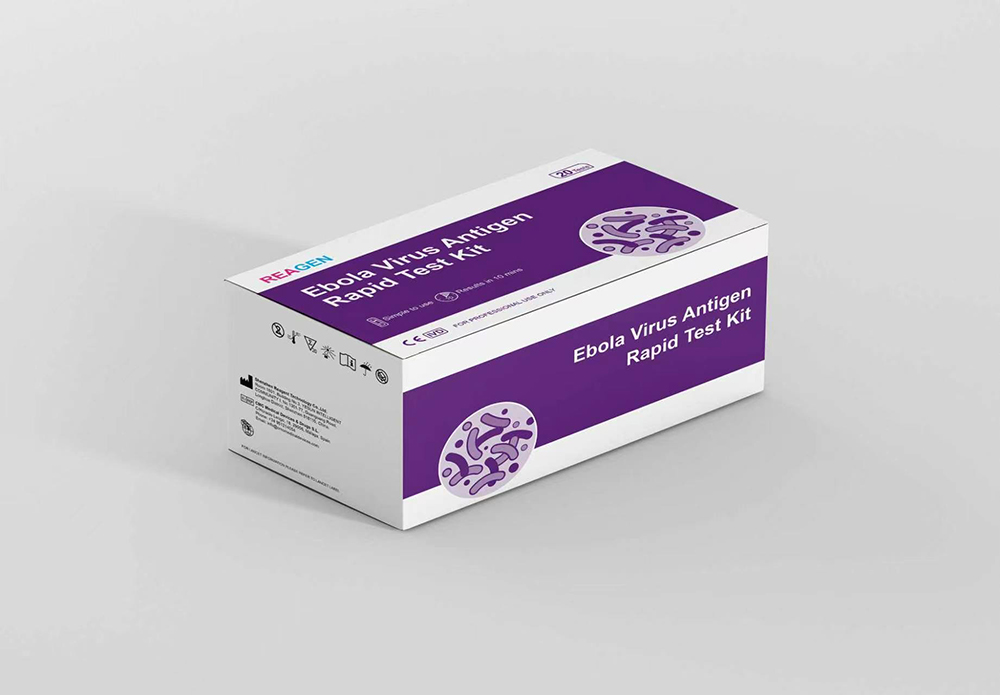
The Ebola Antigen Rapid Test is a rapid, serological, lateral flow chromatographic immunoassay for the qualitative detection of antigens from Ebola viruses in human whole blood, serum or plasma specimens as an aid in the diagnosis of Ebola virus infection.
【SUMMARY】
The Ebola virus causes an acute, serious illness which is often fatal if untreated. Ebola virus disease (EVD) first appeared in 1976 in 2 simultaneous outbreaks, one in Nzara, Sudan, and the other in Yambuku, Democratic Republic of Congo. The latter occurred in a village near the Ebola River, from which the disease takes its name.
Electron micrographs of members of genus Ebolavirus show them to have the characteristic thread-like structure of a filovirus. EBOV VP30 is around 288 amino acids long. The virions are tubular in general form but variable in overall shape and may appear as the classic shepherd’s crook or eyebolt, as a U or a 6, or coiled, circular, or branched; laboratory techniques, such as centrifugation, may be the origin of some of these formations. Virions are generally 80 nm in diameter with a lipid bilayer anchoring the glycoprotein which projects 7 to 10 nm long spikes from its surface. They are of variable length, typically around 800 nm, but may be up to 1000 nm long. In the center of the virion is a structure called nucleocapsid, which is formed by the helically wound viral genomic RNA complexed with the proteins NP, VP35, VP30, and L. It has a diameter of 80 nm and contains a central channel of 20–30 nm in diameter. Virally encoded glycoprotein (GP) spikes 10 nm long and 10 nm apart are present on the outer viral envelope of the virion, which is derived from the host cell membrane. Between envelope and nucleocapsid, in the so-called matrix space, the viral proteins VP40 and VP24 are located.
The virus family Filoviridae includes 3 genera: Cuevavirus, Marburgvirus, and Ebolavirus. There are 5 species that have been identified: Zaire, Bundibugyo, Sudan, Reston and TaïForest. The first 3, Bundibugyo Ebolavirus, Zaire Ebolavirus, and Sudan Ebolavirus have been associated with large outbreaks in Africa. The virus causing the 2014 west African outbreak belongs to the Zaire species.
Ebola then spreads through human-to-human transmission via direct contact (through broken skin or mucous membranes) with the blood, secretions, organs or other bodily fluids of infected people, and with surfaces and materials (e.g., bedding, clothing) contaminated with these fluids.
The incubation period, that is, the time interval from infection with the virus to onset of symptoms is 2 to 21 days. Humans are not infectious until they develop symptoms. First symptoms are the sudden onset of fever fatigue, muscle pain, headache and sore throat. This is followed by vomiting, diarrhoea, rash, symptoms of impaired kidney and liver function, and in some cases, both internal and external bleeding (e.g., oozing from the gums, blood in the stools). Laboratory findings include low white blood cell and platelet counts and elevated liver enzymes.
It can be difficult to distinguish EVD from other infectious diseases such as malaria, typhoid fever and meningitis. Confirmation that symptoms are caused by Ebola virus infection are made using the following investigations:
1.antibody-capture enzyme-linked immunosorbent assay (ELISA)
2.antigen-capture detection tests
3.serum neutralization test
4.reverse transcriptase polymerase chain reaction (RT-PCR) assay
5.electron microscopy
6.virus isolation by cell culture.
Samples from patients are an extreme biohazard risk; laboratory testing on non-inactivated samples should be conducted under maximum biological containment conditions.
The Ebola Antigen Rapid Test is a simple, visual qualitative test that detects Ebola virus antigen in human whole blood, serum or plasma specimens. This assay is based on immunochromatography and can give a result at 10 minutes.
【TEST PRINCIPLE】
The Ebola Antigen Rapid Test is a qualitative membrane-based immunoassay for the detection of antigens from Ebola viruses in human whole blood, serum or plasma specimens. After specimen is added to the specimen well (S) on the sample pad, it moves through the conjugate pad and mobilizes latex beads antiEbola conjugate that is coated on the conjugate pad. The mixture moves along the membrane by capillary action and reacts with anti-Ebola antibody that is coated on the test line region (T). If the specimen contains Ebola virus antigen, a colored line will appear in the test line region (T), indicating a positive result. If the specimen does not contain Ebola virus antigen, a colored line will not appear in this region, indicating a negative result. An internal quality control is included in the test, in the form of a colored line appearing in the control line region (C), indicating that the test is functional, and proper and sufficient volume of specimen has been applied to enable migration through the test and control line, regardless of whether there is a test line or not. If the control line (C) does not appear within the testing time, test result is invalid and the test should be repeated with a new test device.