

Overview
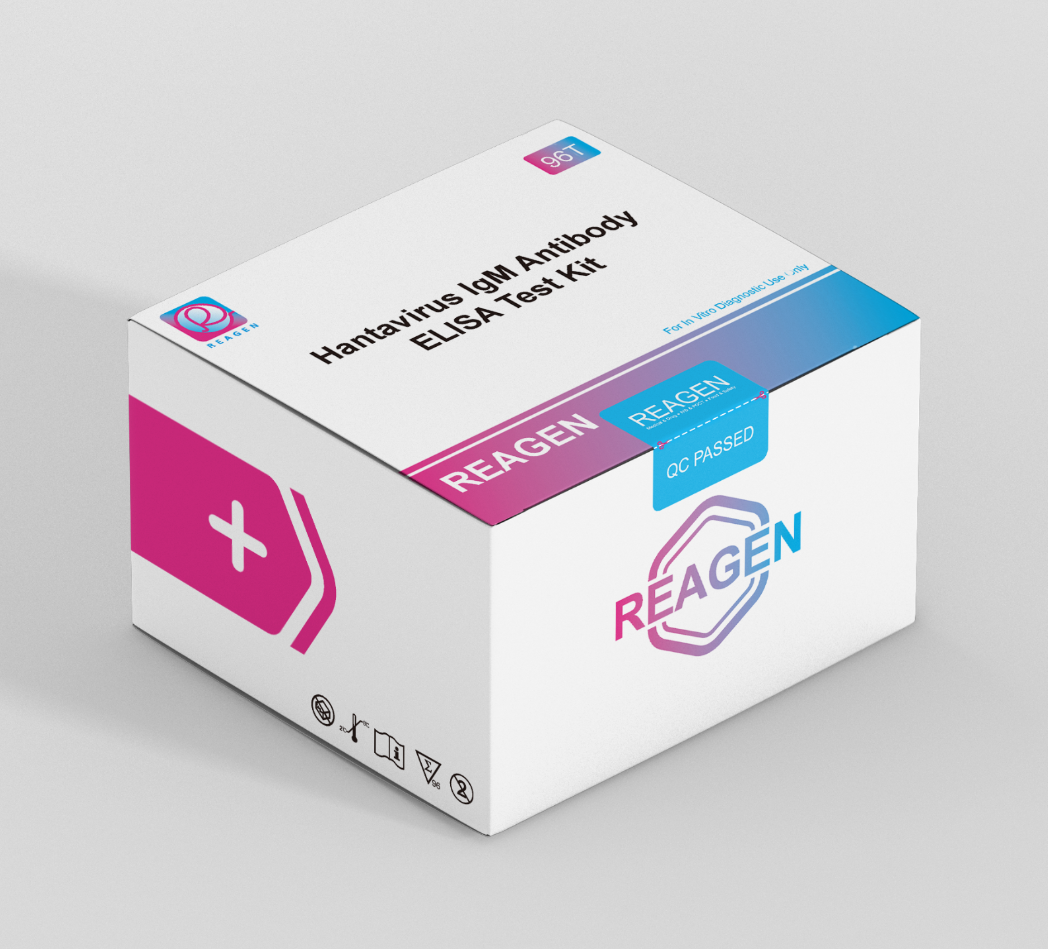
This kit is suitable for the in vitro qualitative detection of Hantavirus (HV) IgM antibodies (HV-IgM) in human serum samples. Hantavirus is the pathogen that causes hemorrhagic fever with renal syndrome (HFRS). HFRS is a global, naturally occurring acute infectious disease. Clinically, it is characterized by fever, bleeding, and kidney damage. It has a rapid onset, rapid progression, and high mortality rate. my country accounts for more than 90% of the world’s reported HFRS cases annually, making it one of the deadliest infectious diseases in my country. The main viruses causing HFRS include Hantavirus (HV), Seoulvirus (SEOV), Puumalavirus (PUUV), and Dobravavirus (DOBV), among others. In my country, Hantavirus and Seoulvirus are the predominantly circulating types.
Principle
This kit uses the capture assay principle to detect hantavirus (HV-IgM) in human serum samples. The microwells are pre-coated with mouse anti-human IgM (u chain). First, the serum sample to be tested is added; all IgM antibodies in the sample are captured, while unbound components (including specific IgG antibodies) are washed away. Second, hantavirus antigen-enzyme labeling is added. The captured hantavirus IgM antibodies specifically bind to the horseradish peroxidase-labeled hantavirus recombinant antigen, washing away other unbound substances. Finally, TMB substrate is used for color development. The presence or absence of hantavirus IgM antibodies in the sample is determined by detecting the absorbance (A value) using an ELISA reader.


